Football has a major presence in Canada, and while there might not be an NFL franchise in the country quite yet, growing support for the sport means there’s a large viewership for games played in the USA, as well as plenty of grassroots participation. And with the Canadian Football League (CFL), interest in homegrown teams is also on the up.
The CFL matches the NFL in terms of many of its rules, although there are some major differences. These differences become even more distinct when comparing Canadian football against American 7s specifically, so here’s an investigation into how those differences result in players evolving along unique paths, depending on where they play.
Physicality
The CFL, like the NFL, requires players to sport comprehensive protective equipment, comprised of helmets and rigid body armor, that enables a level of crunching physicality in play styles, combined with the added shielding from the harder hits. The upshot is an interesting combination of tougher defensive play styles, where leading with the head is entirely possible, and this also spills over to how ball carriers operate on the field, enabling an emphasis on power first and foremost.
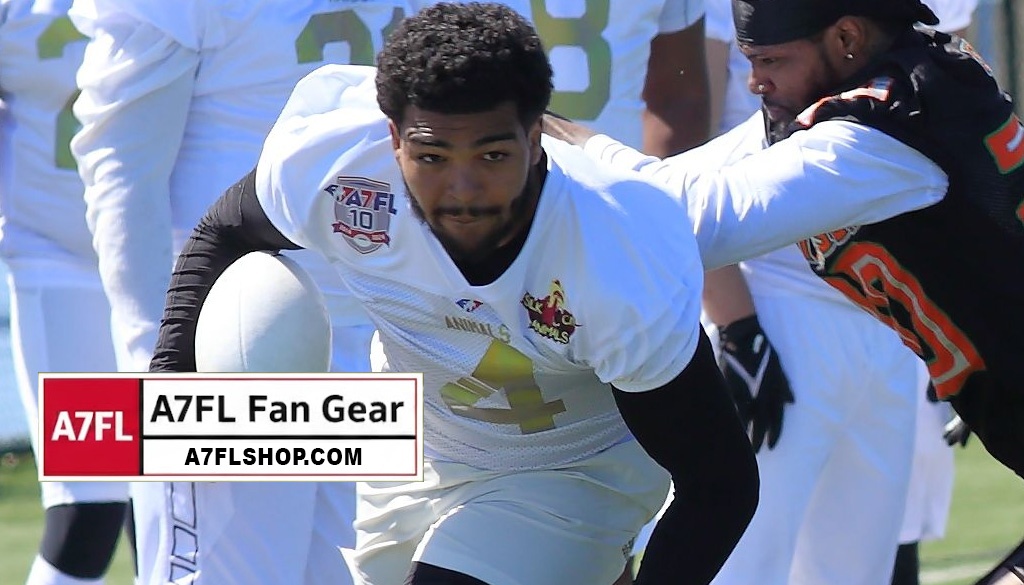
Conversely, because American 7s has a rule set that removes helmets and other rigid protective wear from the equation, what results is a play style built more along the lines of rugby. Wrap-tackling that doesn’t leave the head exposed to heavy impacts, but instead engages the arms and chest to bring opponents down, takes precedence. Likewise, nimbleness outdoes raw strength and straight-line speed for ball carriers, because taking a tackle has more consequences.
Aside from the way this builds players, it also impacts in-play odds. So you’ll see live NFL betting and CFL predictions focused on entirely different aspects of the game compared with American 7s.
Geometry
Another major impact on player skill focus and performance comes from the geometry of the fields used in the two variants of the game. In the CFL, the dimensions are 110×65 yards, while for American 7s the rules require a 100×37 yard setup.
Narrowing the field so much means that while Canadian football players can make use of horizontal escape routes in order to overcome the defense, American 7s players can actually deploy the sideline as more of a stop block in its own right. In turn, receivers must win with vertical speed, quick lateral cuts, and short-space contested catches. That establishes entirely different instincts and expectations in the players that come up through the ranks here.
Player Count
Last but not least, the number of players to a side has one of the biggest impacts on how American 7s players develop compared with their counterparts in the CFL. Aside from altering the ebb and flow of play, it means there’s less specialization across teams, so you won’t see the kind of wall-style offensive linemen rubbing shoulders with their more nimble counterparts. Everyone has to be relatively agile, regardless of their role.
Of course, there are certainly interchangeable skills developed in American 7s and the CFL that can just as readily be applied anywhere. But it’s interesting to note how rule differences can create such a divergence in ostensibly similar games.
















 Update cookies preferences


